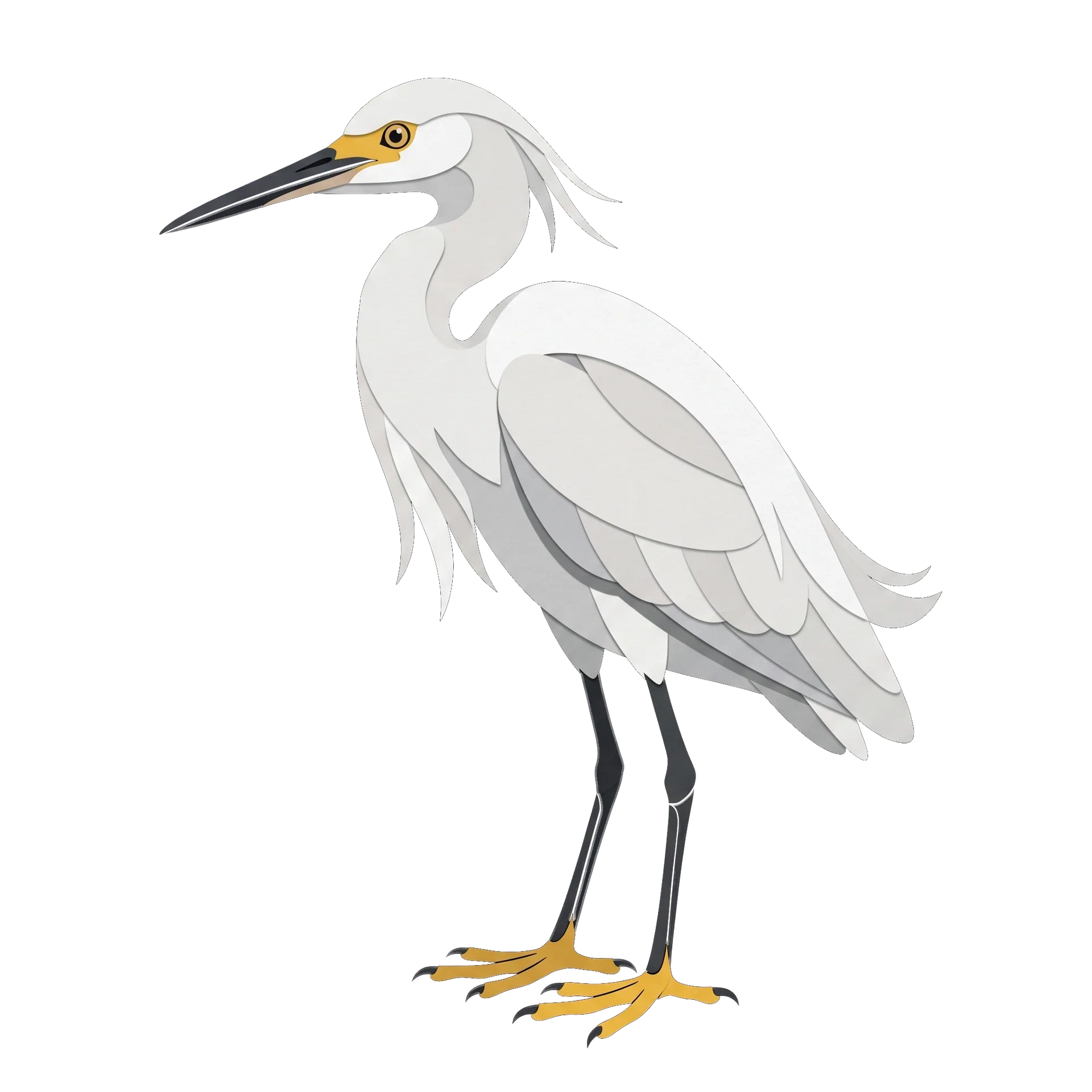
A Snowy Egret hunting looks like it's dancing, not fishing. Where a Great Blue Heron stands rigid and waits, a Snowy Egret dashes through shallow water, flares its wings, and shuffles its bright yellow feet through the mud, deliberately stirring up anything hidden there and snapping it up the instant it moves. The golden feet at the end of otherwise black legs are the clearest field mark and, it turns out, also the tool.
That same brightness once nearly finished the species off. Around 1900, a Snowy Egret's delicate breeding plumes sold to milliners for prices that reportedly outpaced gold by weight, and plume hunters devastated nesting colonies across the Southeast to supply the hat trade. The outrage that followed helped launch some of the earliest American bird-protection legislation, and egret numbers have recovered strongly in the century since.
Today they're a common, almost workaday sight at any coastal marsh or inland wetland with shallow water, often standing shoulder to shoulder with Great Egrets, herons, and ibises at a shared feeding ground — a level of ordinariness that belies how close the species came to disappearing from that same landscape entirely.
Like this? Get one bird every morning, by email.
You're in. Your first bird arrives with the next morning email (5:30am ET) — and your life list now syncs.Your account →
How to identify
- Medium-sized, all-white heron with a slender black bill, black legs, and strikingly bright yellow feet, sometimes called 'golden slippers.'
- Breeding adults grow wispy, curling plumes on the head, neck, and back.
- Active and often theatrical while hunting: dashing, hopping, and stirring the water with its feet, unlike the still-hunting Great Egret.
- Compare the larger Great Egret (yellow bill, black feet) and immature Little Blue Heron (greenish legs, no yellow feet).
Voice
Harsh, guttural croaks and squawks, mostly given around nesting colonies.
At a glance
- Family
- Ardeidae (herons)
- Range
- North, Central, and South America
- Habitat
- Marshes, tidal flats, and shallow wetlands, coastal and inland
- Diet
- Small fish, crustaceans, and insects, often flushed by stirring the mud with its feet
Where it lives
How big is it?
How is it doing?
Field notes
- Those yellow feet aren't decorative: the egret shuffles and stirs them through shallow mud and water to flush hidden fish and invertebrates into the open, essentially fishing with its own toes.
- Snowy Egrets were a prime target of the plume trade around 1900, when their breeding-season feathers sold for more per ounce than gold on the millinery market — a slaughter that helped spark the earliest American bird-protection laws.
- The species nests in mixed colonies with other herons, egrets, and ibises, and can raise a brood of three to five chicks in a single season under good conditions.
Go deeper
The daily email
Get tomorrow's bird in your inbox
One bird at 5:30am ET, every day. Free, no password, one-click unsubscribe — and your life list syncs across devices.
You're in. Your first bird arrives with the next morning email (5:30am ET) — and your life list now syncs.Your account →