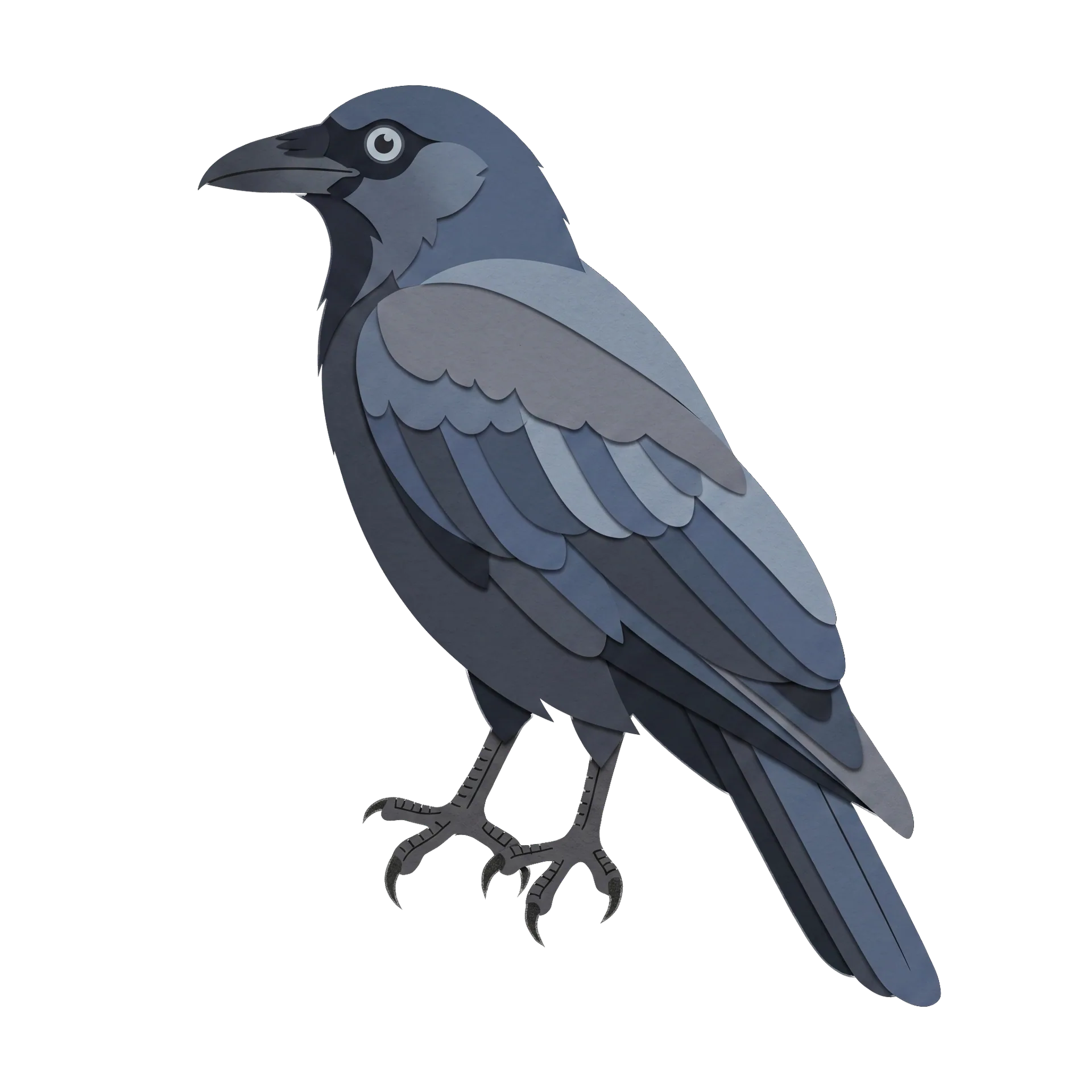
A big black bird strutting across a parking lot doesn't look like much, but American Crows recognize individual human faces and hold the grudge for years. Researchers who trapped and banded crows while wearing a particular mask found the birds scolding that same mask on sight seasons later, and passing the warning to crows that had never been anywhere near the original trapping.
Family life runs on the same intelligence. Young crows commonly stay with their parents past their first year, helping defend the territory and feed the next brood before finally leaving to start their own: a level of extended cooperation that's unusual among North American birds and puts crow families closer in structure to some primate groups than to typical songbirds.
Most of a crow's day looks anything but glamorous: landfills, farm fields, and roadside carrion, all worked with the same flat interest. But the same species gathers in winter roosts tens of thousands strong, and drops hard-shelled nuts onto pavement to crack them open — the popular idea that they deliberately wait for passing cars to finish the job didn't hold up when researchers actually tested it, but the crow doesn't need the car. It figured out the pavement on its own.
Like this? Get one bird every morning, by email.
You're in. Your first bird arrives with the next morning email (5:30am ET) — and your life list now syncs.Your account →
How to identify
- Entirely glossy black (bill, legs, and feathers alike) with a faint blue-purple sheen visible in direct sun.
- A large, heavy-billed songbird, bigger and more solidly built than any blackbird it might be confused with at a glance.
- Walks with a confident, deliberate strut on the ground rather than the sideways hop of smaller birds.
- Compare the Common Raven, notably larger with a shaggier throat, a wedge-shaped tail, and a deeper croak instead of a caw.
Voice
A flat, nasal caw-caw-caw, along with a wide range of rattles, clicks, and softer conversational notes within a family group.
Recording: Rachel Thurman, XC1162762, xeno-canto.org (CC-BY 4.0)
At a glance
- Family
- Corvidae (crows & jays)
- Range
- Most of the United States and southern Canada
- Habitat
- Nearly everywhere — farmland, woodlots, suburbs, city parks, and landfills
- Diet
- Nearly anything — insects, seeds, fruit, carrion, garbage, eggs, and nestlings of other birds
Where it lives
How big is it?
How is it doing?
Field notes
- Crows recognize individual human faces and hold the memory for years, and they'll pass warnings about a specific person who has threatened them on to other crows that never witnessed the original encounter.
- Family groups stay together for years: young crows from previous broods often remain with their parents as 'helpers,' assisting with territory defense and feeding the next year's chicks before eventually striking out on their own.
- Crows have occasionally been documented modifying and using simple tools, regularly drop hard-shelled nuts onto pavement to crack them open (a controlled study found no real evidence they're deliberately timing the drops to passing cars, despite the popular story), and gather in enormous communal winter roosts numbering in the tens of thousands.
Go deeper
The daily email
Get tomorrow's bird in your inbox
One bird at 5:30am ET, every day. Free, no password, one-click unsubscribe — and your life list syncs across devices.
You're in. Your first bird arrives with the next morning email (5:30am ET) — and your life list now syncs.Your account →