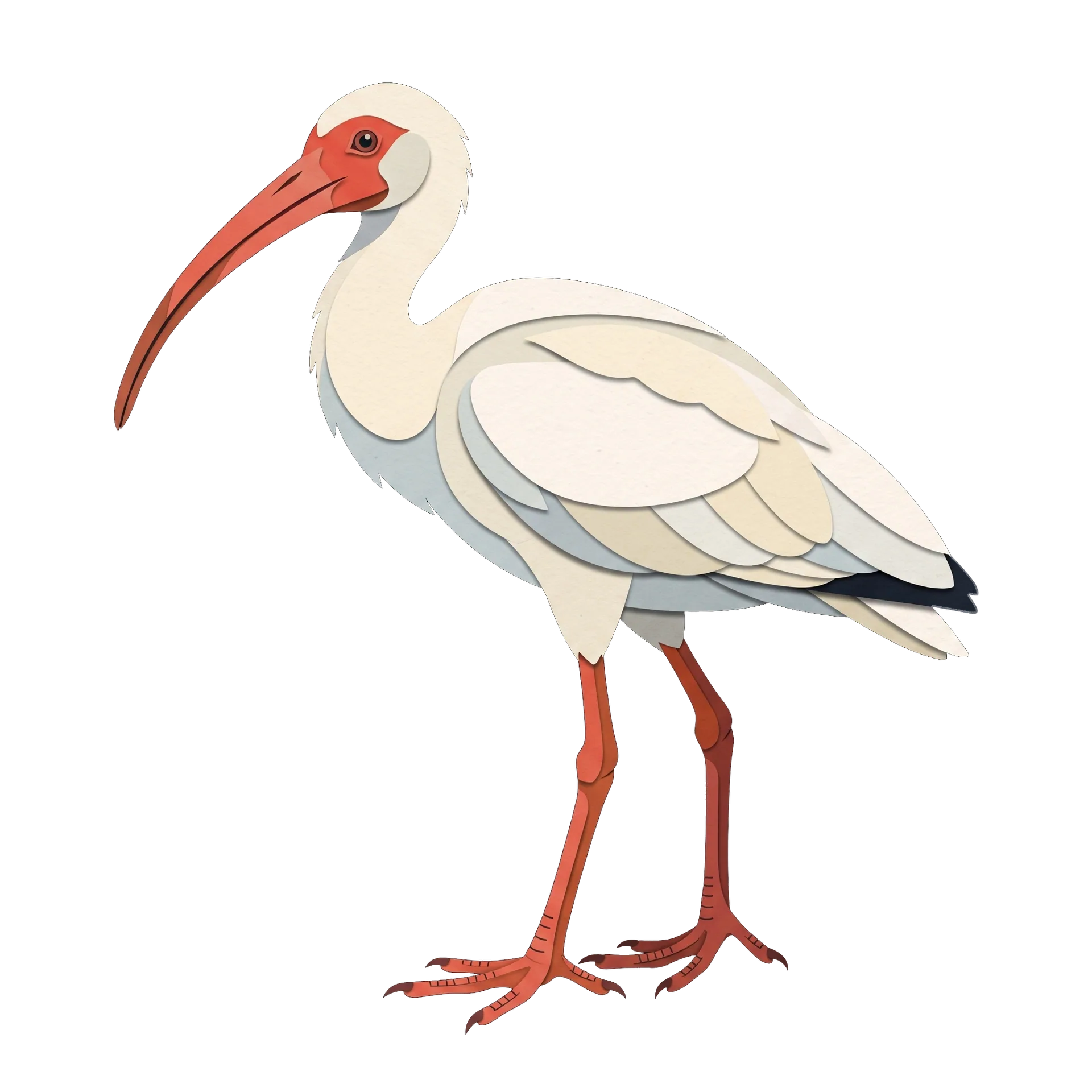
A flock of White Ibis crossing a marsh at dusk, black wingtips flashing against otherwise solid white bodies, is one of the easier wading-bird silhouettes to learn — no other North American bird combines that all-white body with a long, downcurved pink bill. On the ground, the bill becomes a tool for a kind of fishing that doesn't require looking: ibises sweep it through mud and shallow water, feeling for crayfish and other small prey rather than watching for it.
In much of Florida, the bird has moved off the marsh and onto the lawn. Suburban White Ibises forage on golf courses and parks, sometimes begging directly from people for bread and other handouts: a habit that spreads a poor diet through the population and has become a genuine concern for wildlife managers even as it delights casual observers.
A University of Florida study found something troubling behind that willingness to eat whatever's offered: ibises raised on prey dosed with environmentally realistic levels of mercury showed altered courtship and pairing behavior as adults, with some high-dose males pairing with other males at notably higher rates than birds raised mercury-free — one of the clearer documented links between an environmental contaminant and a wild bird's mating behavior.
Like this? Get one bird every morning, by email.
You're in. Your first bird arrives with the next morning email (5:30am ET) — and your life list now syncs.Your account →
How to identify
- An all-white wading bird with a long, downcurved reddish-pink bill and matching pink legs.
- Black wingtips show only in flight, when flocks fly in loose lines with necks outstretched, not tucked.
- Immatures are mottled brown and white, gradually molting into full white plumage over about two years.
- Forages by feel, sweeping the bill through mud and shallow water rather than watching for prey.
Voice
A nasal, grunting honk, mostly heard around foraging flocks and nesting colonies.
At a glance
- Family
- Threskiornithidae (ibises & spoonbills)
- Range
- Southeastern U.S. coast, Mexico, Central America, and northern South America
- Habitat
- Marshes, mudflats, mangroves, and increasingly suburban lawns and parks
- Diet
- Crayfish and other small aquatic prey, probed from mud with a long, curved bill
Where it lives
How big is it?
How is it doing?
Field notes
- White Ibises have moved into suburban Florida in large numbers, foraging on lawns and golf courses for insects and even panhandling for bread, a habit that worries biologists more than it charms them, since a starchy diet is bad for the birds.
- Flocks probe mudflats by feel rather than sight, and a foraging group moving across a flat in unison, bills working the mud in near-lockstep, is a common sight on the Gulf Coast.
- In a controlled University of Florida study, White Ibises raised on environmentally realistic levels of mercury-contaminated prey showed altered mating behavior as adults — some high-dose males paired with other males at notably elevated rates compared to uncontaminated birds, an unusually direct link between a pollutant and behavior in a wild bird.
Go deeper
The daily email
Get tomorrow's bird in your inbox
One bird at 5:30am ET, every day. Free, no password, one-click unsubscribe — and your life list syncs across devices.
You're in. Your first bird arrives with the next morning email (5:30am ET) — and your life list now syncs.Your account →