A Southern Lapwing rarely lets anything approach its nest unnoticed. The alarm call (a sharp, repeated tewit that can go on for minutes) has made the bird an unofficial guard for whole patches of farmland, since quieter, more vulnerable species nesting nearby effectively get a free early-warning system from a neighbor that can't stand to stay quiet.
They'll dive straight at cattle, dogs, and people who wander too close to a nest or newly hatched chicks, a boldness unusual even among plovers, a family already known for defending nests hard.
The bird's range has grown substantially as its preferred habitat has spread. Southern Lapwings favor open, short-grass ground (exactly what cattle ranching and cleared pasture create), and the species has pushed north out of South America into Central America and parts of the Caribbean over the past century, a rare case of a bird actually benefiting from large-scale land clearing.
Like this? Get one bird every morning, by email.
You're in. Your first bird arrives with the next morning email (5:30am ET) — and your life list now syncs.Your account →
How to identify
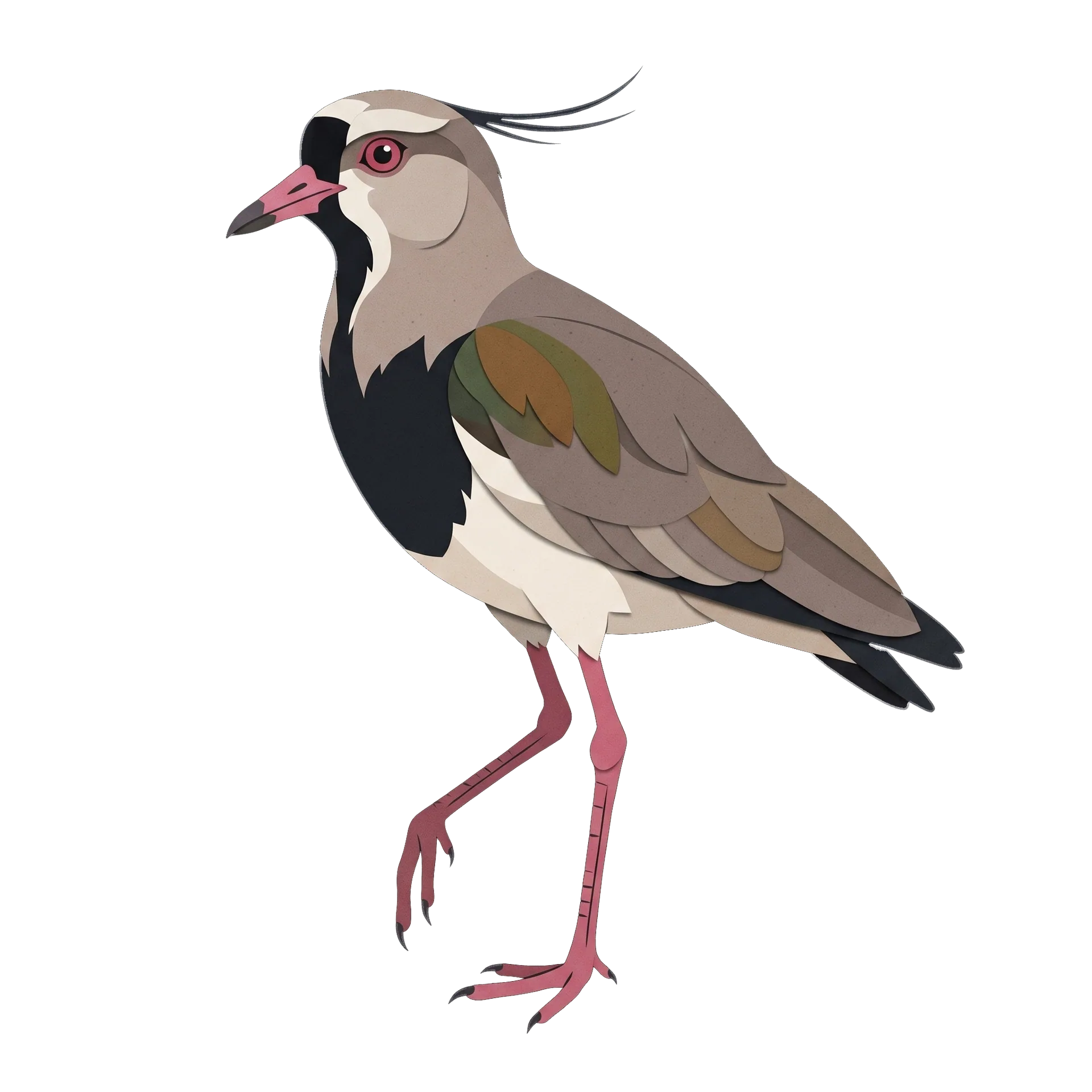
- A large, boldly patterned plover: bronzy-green wings, a black chest band, and a thin black crest on the back of the head.
- Bright red eyes, a red base to the bill, and long, coral-pink legs.
- Extremely vocal and aggressive around a nest, mobbing anything from cattle to people that ventures too close.
- Often seen standing conspicuously on open ground, unlike the smaller, more secretive plovers it's related to.
Voice
A loud, sharp, repeated tewit or kee-kee-kee, given constantly in alarm and often what gives the bird's presence away before it's seen.
Recording: JAYRSON ARAUJO DE OLIVEIRA, XC1163742, xeno-canto.org (CC-BY-NC-SA 4.0)
Lore
In Guaraní legend, two young parents neglect their children, too careless or too busy to tend them properly. The god Tupá, furious, shuts the family's dwelling inside an impenetrable fog for five days, staying inside with the couple the whole time to teach them, at last, how a child should be cared for. When the fog lifts on the fifth day, the door opens on two changed birds: black across the chest as if in mourning, eyes red from days of crying, both teros. Ever since, the story goes, no bird works harder at guarding its young.
The legend still explains something real: Southern Lapwings are relentless, noisy defenders of a nest, diving at anything from cattle to people that gets too close, and some Guaraní households keep the tero's reputation for vigilance as a kind of household guardian, a bird whose alarm call means someone (or something) is coming.
At a glance
- Family
- Charadriidae (plovers & lapwings)
- Range
- Central America and most of South America east of the Andes
- Habitat
- Open grassland, farmland, and wetland edges — including golf courses and city parks
- Diet
- Insects and other invertebrates gleaned from open ground
Where it lives
How big is it?
How is it doing?
Field notes
- Southern Lapwings have expanded their range dramatically over the past century, following the spread of cattle pasture and cleared farmland northward from South America into Central America and the Caribbean.
- The species is sometimes called an informal 'guard dog' bird in rural areas, since its relentless alarm calling at any approaching predator or person often serves as an early warning for other, quieter birds nesting nearby.
- Chicks are precocial and leave the nest within hours of hatching, following a parent across open ground while still covered in down — a defense strategy that relies on the adults' loud, aggressive mobbing to keep predators at bay.
Go deeper
The daily email
Get tomorrow's bird in your inbox
One bird at 5:30am ET, every day. Free, no password, one-click unsubscribe — and your life list syncs across devices.
You're in. Your first bird arrives with the next morning email (5:30am ET) — and your life list now syncs.Your account →