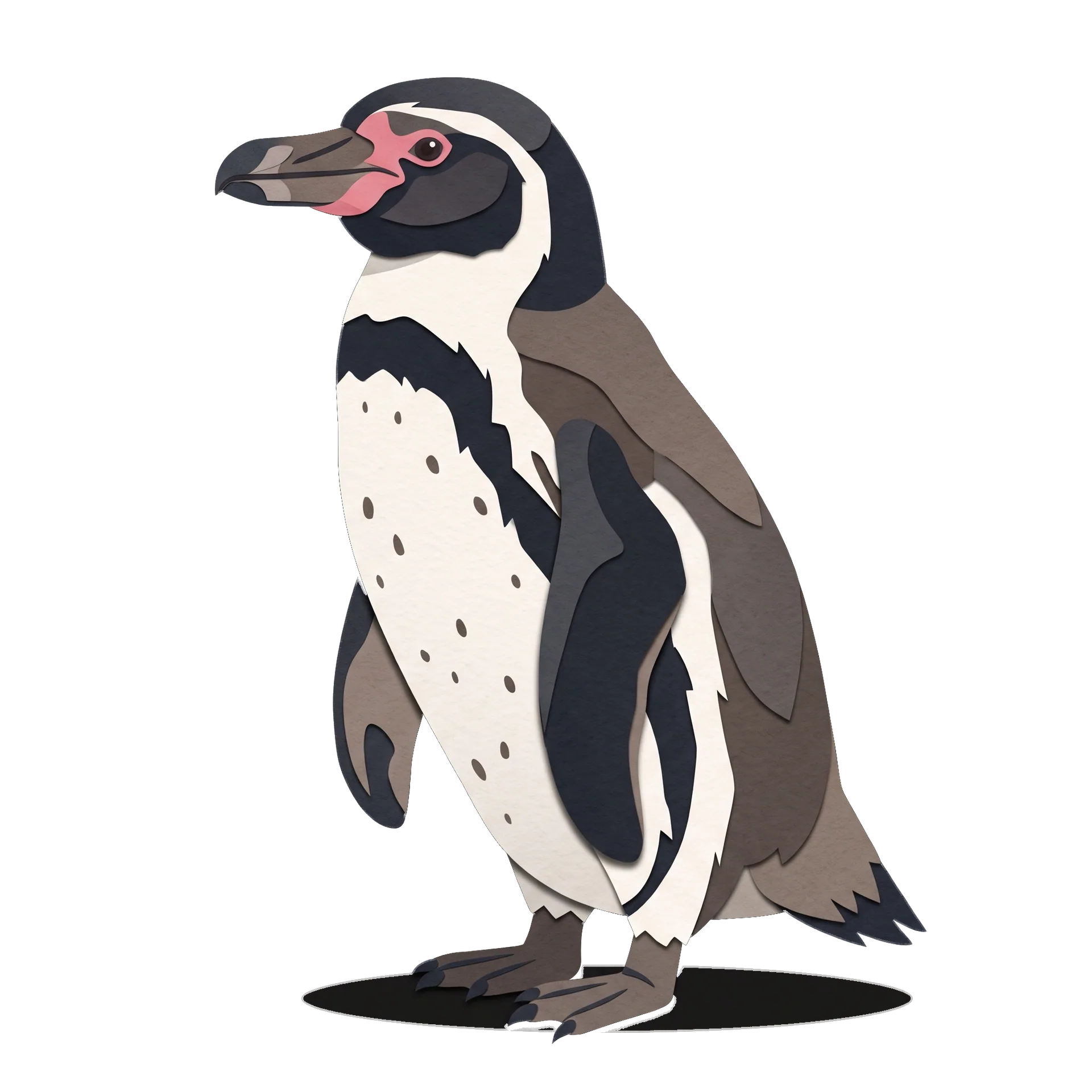
A Humboldt Penguin lives somewhere that shouldn't work for a penguin at all: a desert coastline in Peru and Chile, hot and dry at ground level, made livable only by the cold, nutrient-rich Humboldt Current running offshore. The birds solve the heat problem with bare pink skin patches around the face that radiate excess warmth, and by digging burrows into old guano deposits along the shore rather than nesting in the open like their Antarctic relatives.
It's the same current that makes the desert coast livable in the first place, pulling in the anchovy and sardine schools that feed not just penguins but one of the richest fisheries on Earth. When an El Niño event warms the water and pushes those fish schools elsewhere, Humboldt Penguin breeding can fail almost entirely for a season, a boom-and-bust rhythm the species has evolved around but that climate variability keeps making harder.
Historic guano mining stripped away much of the soft, deep material the penguins once burrowed into, pushing many colonies onto exposed rock with far less protection from heat and predators. Combined with fishing pressure on the same anchovy stocks the penguins depend on, the species is now listed as Vulnerable, its population a fraction of historic numbers along a coast that's otherwise still rich with the fish that first made it possible.
Like this? Get one bird every morning, by email.
You're in. Your first bird arrives with the next morning email (5:30am ET) — and your life list now syncs.Your account →
How to identify
- A mid-sized penguin, black above and white below, with a single black band curving across the upper chest.
- Bare pink skin patches around the eye and base of the bill help shed excess body heat in a relatively warm climate for a penguin.
- Unlike Antarctic species, nests in burrows dug into guano deposits or rocky crevices along a desert coastline.
- Named for the cold ocean current that makes its subtropical range livable for a cold-water specialist.
Voice
A loud, braying call, similar to a donkey's — shared with several of its close relatives, sometimes called 'jackass penguins.'
Recording: Cristian Pinto, XC520046, xeno-canto.org (CC-BY-NC-SA 4.0)
At a glance
- Family
- Spheniscidae (penguins)
- Range
- Pacific coast of Peru and Chile
- Habitat
- Rocky coastlines and offshore islands, cooled by the Humboldt Current
- Diet
- Small schooling fish, especially anchovies and sardines
Where it lives
How big is it?
How is it doing?
Field notes
- Humboldt Penguins live along a genuinely desert coastline, and survive the mismatch between a cold-adapted body and a warm climate by nesting in burrows and shedding heat through bare, unfeathered skin patches on the face.
- The cold, nutrient-rich Humboldt Current that gives the species its name also drives huge fish stocks close to shore — but the same current fluctuates dramatically during El Niño events, and penguin breeding success crashes hard in warm-water years when anchovies and sardines move elsewhere.
- Historic guano mining stripped away the deep deposits Humboldt Penguins traditionally burrowed into to nest, forcing many colonies onto more exposed rock and contributing to the species' Vulnerable status alongside overfishing and bycatch in local fisheries.
Go deeper
The daily email
Get tomorrow's bird in your inbox
One bird at 5:30am ET, every day. Free, no password, one-click unsubscribe — and your life list syncs across devices.
You're in. Your first bird arrives with the next morning email (5:30am ET) — and your life list now syncs.Your account →