A Northern Gannet drops from 30 meters up and hits the water at speeds that can top 100 km/h — closer to something thrown than something diving. It survives the repeated impact through a set of adaptations built specifically for it: air sacs cushioning the chest and face under the skin, no external nostrils to flood, and a reinforced skull and neck that absorb the shock of hitting water at highway speed.
The colony carries that same intensity. Thousands of pairs pack onto a cliff face spaced barely out of a sitting neighbor's reach, close enough for warmth and safety in numbers, but tight enough that a bird returning to its nest still has to run a gauntlet of jabs from every neighbor along the way in.
Spotting fish from that plunge height takes sharp vision, though probably not the exotic kind: unlike gulls, gannets and their relatives appear to lack true ultraviolet sensitivity, seeing more toward violet instead. Whatever the mechanism, a hunting flock circling and dropping one after another over a school of fish is hard to look away from anywhere on the open Atlantic.
Like this? Get one bird every morning, by email.
You're in. Your first bird arrives with the next morning email (5:30am ET) — and your life list now syncs.Your account →
How to identify
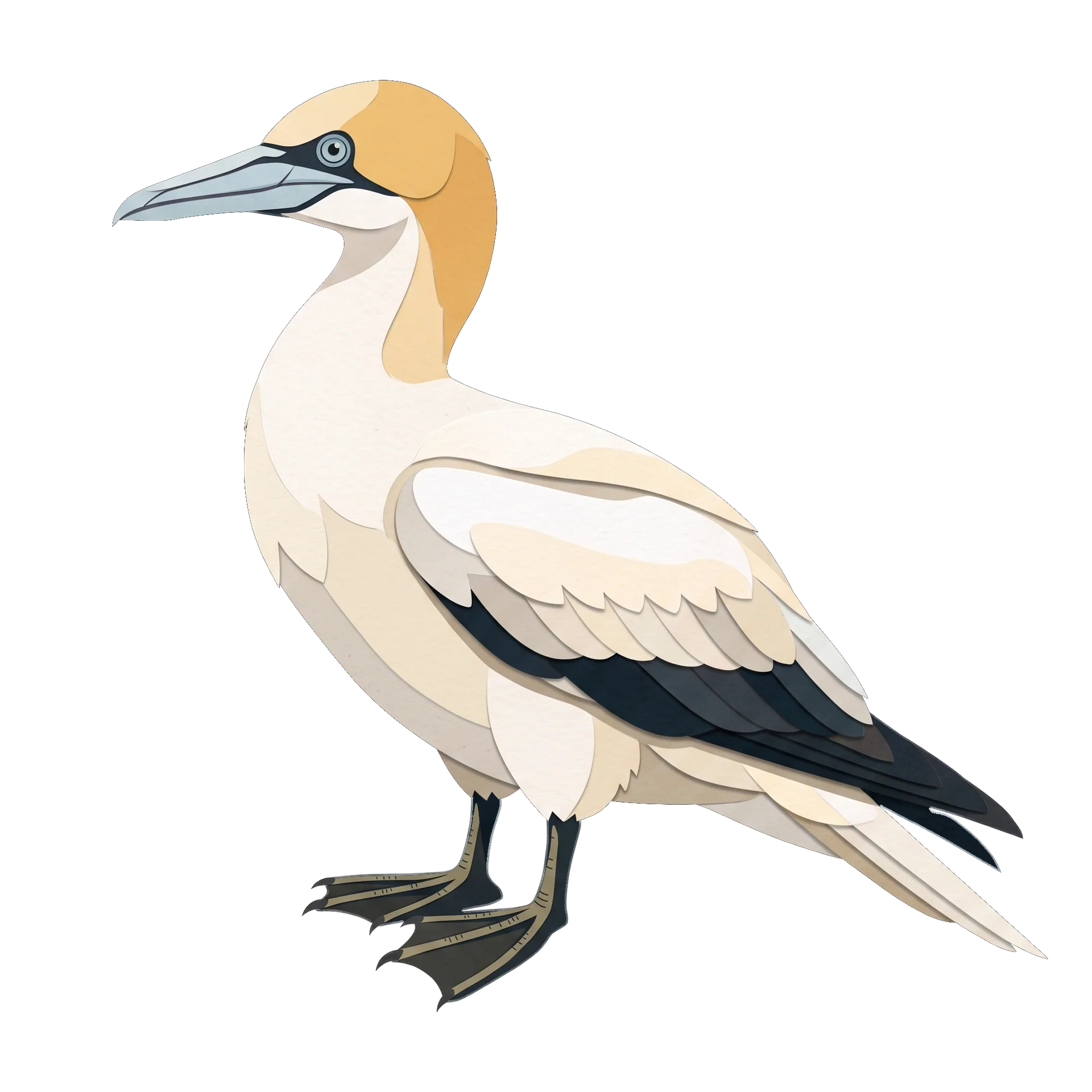
- A large, brilliant white seabird with black wingtips and a warm golden-buff wash across the head and neck.
- Long, pointed wings and a dagger-like pale blue-gray bill built for plunge-diving.
- Dives from great height straight into the water at high speed, folding into an arrow shape just before impact.
- Immatures are dark brown, speckled with white, and take about five years to reach full adult plumage.
Voice
A harsh, repeated arrah-arrah-arrah at the crowded breeding colony; largely silent at sea.
Recording: Sonothèque ADVL, XC1143445, xeno-canto.org (CC0 1.0)
Lore
On Sula Sgeir, a bare rock stack some 40 nautical miles north of the Isle of Lewis, the Men of Ness have hunted young Northern Gannets for guga since at least 1549, when a churchman's account already described boatloads of the salted birds being carried home to the Hebrides. Each autumn a crew of about ten rows out and spends roughly two weeks on the stack, working in pairs to take fledglings from the cliff nests with a noosed pole, then plucking, singeing, and salt-curing the meat for the journey back.
It's the last traditional seabird harvest left in Scotland, and the last legal one anywhere in the UK, carried out under an annual license from NatureScot that sets how many birds may be taken: a cap that stood at 2,000 birds for years before being cut to around 500 as gannet colonies came under pressure from avian flu and other declines, and which NatureScot withheld outright for the 2026 season over concerns about the local population. For Ness, though, the hunt has always been about more than the quota. It's a piece of Gaelic identity that has survived the collapse of the fishing industries around it, defended fiercely by the community even as animal-welfare groups keep pressing to end it.
At a glance
- Family
- Sulidae (boobies & gannets)
- Range
- North Atlantic: breeding colonies in Canada, Iceland, and the British Isles
- Habitat
- Open ocean, nesting in dense colonies on steep coastal cliffs and islands
- Diet
- Fish, caught in spectacular high-speed dives from up to 30 meters
Where it lives
How big is it?
How is it doing?
Field notes
- Gannets can hit the water at over 100 km/h during a dive, and a suite of internal adaptations (air sacs under the skin, no external nostrils, reinforced skull and neck) cushions the impact well enough to let them dive again minutes later.
- Breeding colonies pack thousands of pairs onto cliff faces spaced barely out of a sitting neighbor's reach, close enough that a bird returning to its nest still has to run a gauntlet of jabs from every neighbor along the way in.
- A gannet's precision from height likely comes down to sharp binocular vision rather than any exotic trick — unlike gulls, gannets and their relatives appear to lack true ultraviolet vision, seeing more into the violet range instead.
Go deeper
The daily email
Get tomorrow's bird in your inbox
One bird at 5:30am ET, every day. Free, no password, one-click unsubscribe — and your life list syncs across devices.
You're in. Your first bird arrives with the next morning email (5:30am ET) — and your life list now syncs.Your account →