A House Wren's song is wildly out of scale with the bird producing it — a fast, bubbling cascade tumbling out of something barely bigger than a golf ball, loud enough to carry across a whole yard. It's one of the most recognizable summer sounds in gardens across two continents, since the species breeds from central Canada down through nearly the entire length of South America, making it arguably the most widely distributed native songbird in the Americas.
Males do the early legwork of a nest before any female is involved. A single male builds several 'dummy' nests (loose piles of twigs stuffed into different cavities across his territory), and a female then picks one to actually line with soft material and use, leaving the rest as unfinished decoys.
The same aggression that makes House Wrens successful colonizers of birdhouses and odd nooks near homes has a darker side: they're known to puncture the eggs of other birds nesting nearby, including bluebirds and other wrens, apparently to reduce competition for cavities and food. Backyard bird enthusiasts hoping to attract bluebirds sometimes have to manage House Wren access carefully as a result.
Like this? Get one bird every morning, by email.
You're in. Your first bird arrives with the next morning email (5:30am ET) — and your life list now syncs.Your account →
How to identify
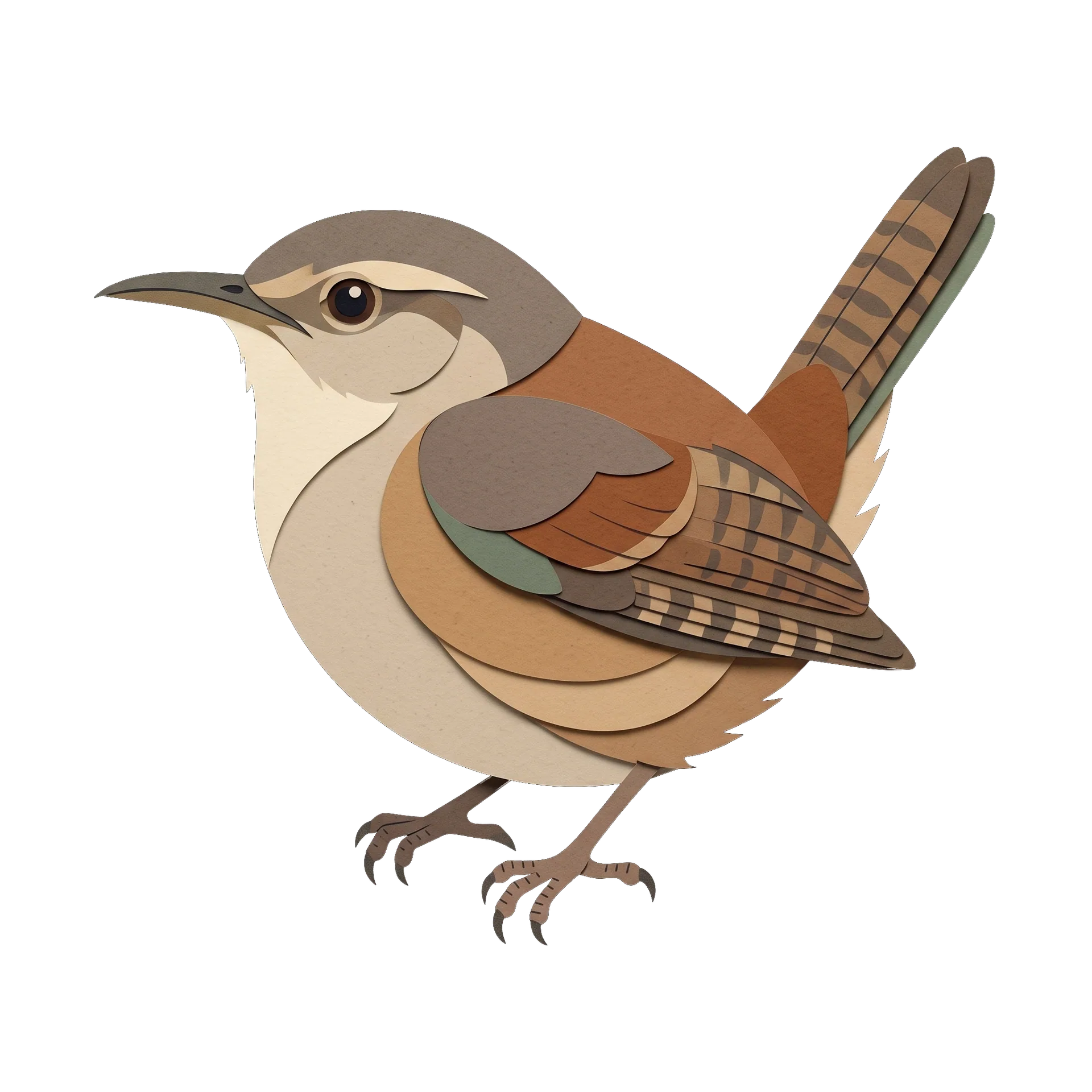
- A tiny, plain brown songbird with fine dark barring on the wings and tail, and a faint pale eyebrow.
- Holds its short tail cocked up over its back, a wren trademark shared with its relatives.
- Sings an loud, bubbling, cascading song out of proportion to its size, often from low cover.
- Nests readily in birdhouses, old boots, mailboxes, and other odd cavities near homes (the source of the name).
Voice
A rapid, bubbling, cascading song that tumbles downward in pitch, delivered with startling volume for such a small bird.
Recording: David Rojas, XC663297, xeno-canto.org (CC0 1.0)
At a glance
- Family
- Troglodytidae (wrens)
- Range
- Breeds across nearly all of the Americas, from Canada to southern South America
- Habitat
- Brushy edges, gardens, and open woodland with dense cover
- Diet
- Insects and spiders almost exclusively
Where it lives
How big is it?
How is it doing?
Field notes
- House Wrens are considered the most widely distributed native songbird in the Americas, breeding from central Canada all the way to the southern tip of South America, though taxonomists debate how many separate species that range actually represents.
- Males build multiple 'dummy' nests of twigs in different cavities before a female chooses one to line and use, sometimes as many as a dozen false starts across a single territory.
- House Wrens will puncture the eggs of other cavity-nesting birds, including other wrens and bluebirds, in nests near their own, an aggressive habit that has occasionally put them in conflict with backyard conservation efforts for other species.
Go deeper
The daily email
Get tomorrow's bird in your inbox
One bird at 5:30am ET, every day. Free, no password, one-click unsubscribe — and your life list syncs across devices.
You're in. Your first bird arrives with the next morning email (5:30am ET) — and your life list now syncs.Your account →