The Black-capped Chickadee weighs about as much as four pennies, stays north through winters that drop to −40°, and greets all of it with what sounds like unshakeable good cheer. The cheer is earned the hard way. Each fall a chickadee stashes seeds and insects in thousands of separate hiding spots (behind bark flakes, in lichen clumps, under shingles) and then retrieves them for months, remembering where each cache is and which ones it has already emptied.
Chickadee flocks broadcast graded alarms in which the number of dee notes scales with how dangerous a predator is, and half the forest listens in: nuthatches, kinglets, and woodpeckers all take cover on a chickadee's say-so. In winter, mixed flocks form around chickadees precisely because they are the neighborhood's best sentinels.
They are also famously easy to befriend. Chickadees are bold, curious, and quick to learn a reliable food source. Stand still with sunflower seeds in an open palm near a busy feeder and, sooner or later, one will decide the strange new perch is worth trying — and land.
Like this? Get one bird every morning, by email.
You're in. Your first bird arrives with the next morning email (5:30am ET) — and your life list now syncs.Your account →
How to identify
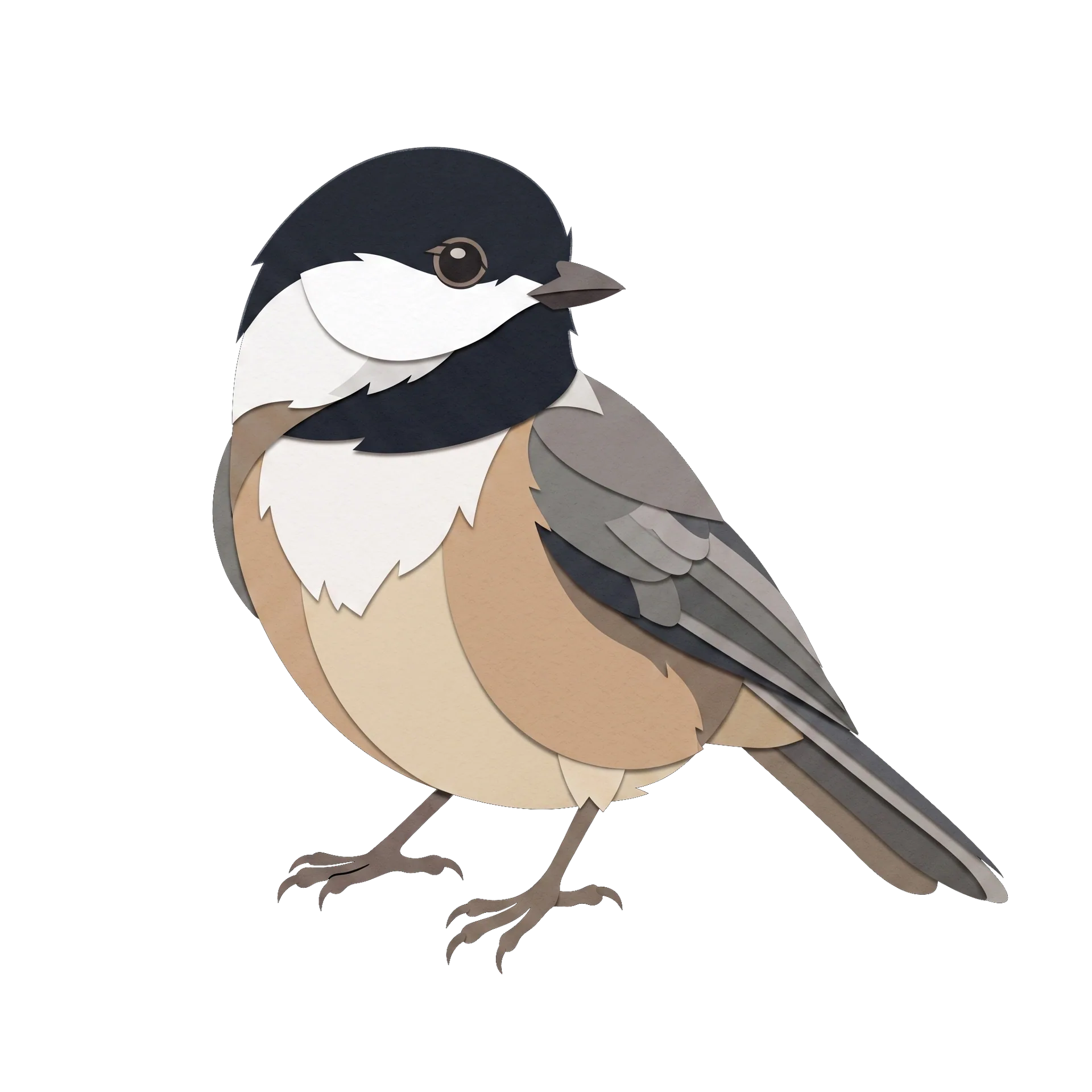
- Tiny and round-headed, with a solid black cap and black bib framing bright white cheeks — a pattern you can read at a glance.
- Buffy wash along the flanks, gray back, and whitish edging in the wing feathers.
- Behavior is a field mark: constant acrobatic motion, often hanging upside down from twig tips, and bold enough to inspect you back.
- Along the narrow band where its range meets the Carolina Chickadee's (roughly New Jersey to Kansas), the two are nearly identical; voice and location beat plumage there.
Voice
Its own name — chick-a-dee-dee-dee — plus a sweet two-note fee-bee song. Count the dees: the more there are, the more dangerous the threat it's announcing.
Lore
In Cherokee tradition, the chickadee carries a reputation for honesty. In the story of Spearfinger, a stone-skinned monster preying on the people, a boastful titmouse lied about where her heart was hidden; the chickadee told the truth and landed on the witch's hand to mark the spot, and the people struck her down. Titmice were remembered as gossips and liars ever after, while the chickadee's visit came to be trusted as an honest sign, foretelling a friend, a stranger, or trouble on the way.
New Englanders have their own long habit of trusting this bird. Thoreau kept one company through the winter at Walden Pond, noting its 'faint flitting lisping notes, like the tinkling of icicles in the grass,' and the day it grew bold enough to land on an armful of firewood he was carrying in and peck at the sticks without fear. Maine made the chickadee its state bird in 1927, the first state to do so; Massachusetts followed in 1941, spelling out the species by name.
At a glance
- Family
- Paridae (tits & chickadees)
- Range
- Northern United States, Canada, and Alaska
- Habitat
- Deciduous and mixed forests, willow thickets, and suburban yards
- Diet
- Insects, spiders, seeds, and berries — thousands of them cached for winter
Where it lives
How big is it?
How is it doing?
Field notes
- Chickadees hide thousands of seeds across their territory each fall, and remember where. The memory center of their brain enlarges with new neurons every autumn to handle the load.
- The chick-a-dee call is a graded alarm code: a perched pygmy-owl (very dangerous) draws far more dee notes than a passing large hawk (less so). Nuthatches and other birds eavesdrop and react accordingly.
- On brutal winter nights, chickadees drop their body temperature by around 10 °C in controlled hypothermia, rationing the fat they gained that day to survive until morning.
Go deeper
The daily email
Get tomorrow's bird in your inbox
One bird at 5:30am ET, every day. Free, no password, one-click unsubscribe — and your life list syncs across devices.
You're in. Your first bird arrives with the next morning email (5:30am ET) — and your life list now syncs.Your account →