Every good stretch of river in North America is somebody's territory. Belted Kingfishers hold linear territories, a kilometer or so of stream or a run of lakeshore, and patrol them all day from favorite perches, firing off the dry rattle that is one of the signature sounds of moving water on this continent. The hunt is worth stopping for: a motionless hover, wings beating and head perfectly still, then the fold and the clean headfirst spear into the shallows, back up to the perch, and a brisk whack-whack-whack of the fish against the branch before it goes down headfirst.
The nest is the unexpected part. This aerial fish-spearer breeds underground, in a tunnel the pair digs with bills and feet a meter or two into a vertical dirt bank, angled slightly uphill so rain drains away from the egg chamber at the end. Banks good enough for digging are scarcer than fish, which is why kingfishers turn up nesting in road cuts and gravel pits far from their fishing water — commuting, like the rest of us, between where they work and where they can afford to live.
Like this? Get one bird every morning, by email.
You're in. Your first bird arrives with the next morning email (5:30am ET) — and your life list now syncs.Your account →
How to identify
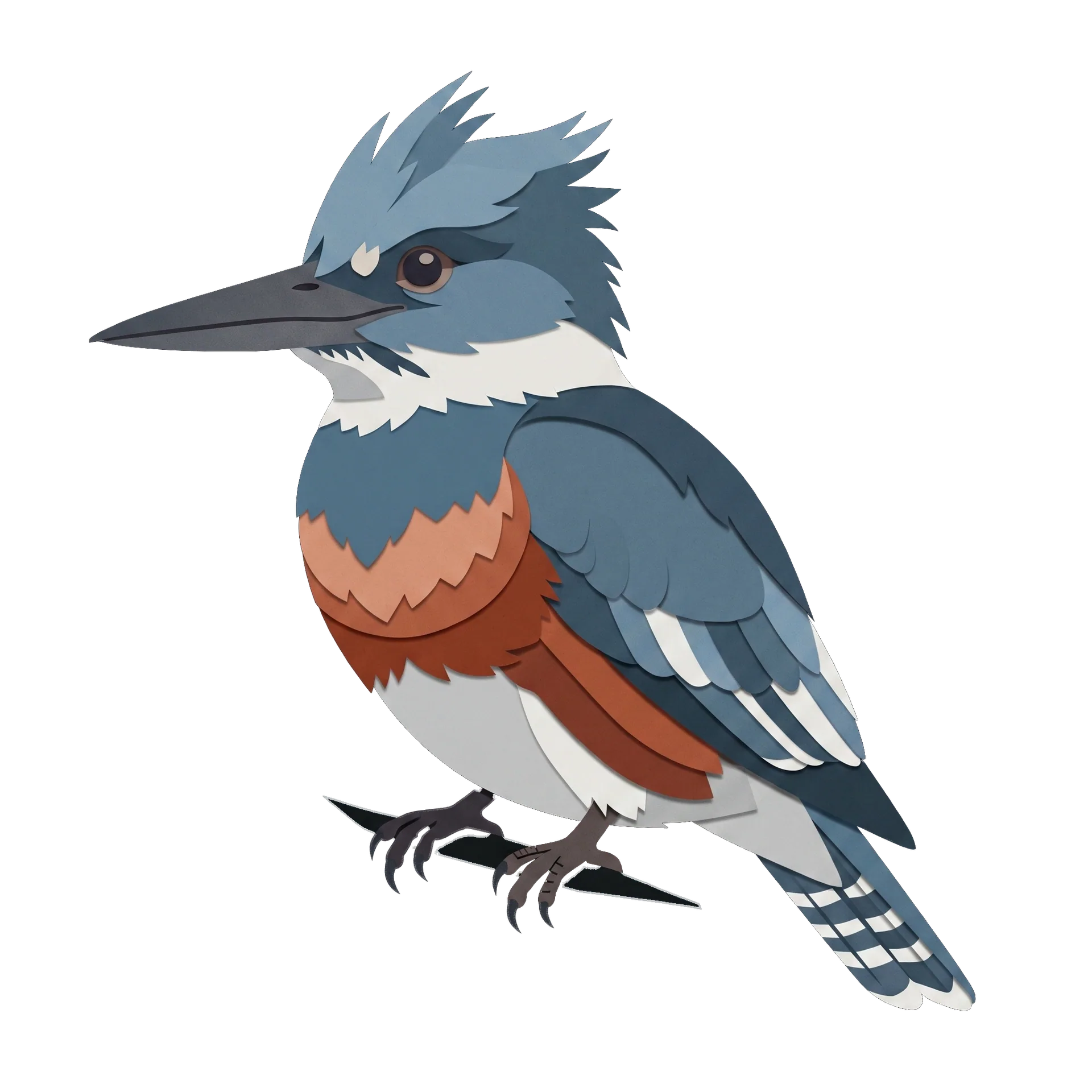
- A stocky, big-headed, blue-gray bird with a shaggy, oversized crest and a heavy dagger bill, almost always beside water.
- Both sexes wear a blue-gray chest band; the female adds a second, rusty band across the belly — she's the more colorful sex, a rarity among birds.
- Hunts from a wire or snag over the water, or hovers in place before plunging headfirst.
- The mechanical rattle call, usually delivered in flight, announces a kingfisher well before you spot it patrolling its stretch of river.
Voice
A dry, rattling clatter fired off in flight, rising and falling as the bird patrols — once learned, never forgotten.
Lore
The species name, alcyon, is a two-thousand-year-old grief story. In Greek myth, Alcyone, daughter of Aeolus, keeper of the winds, lost her husband Ceyx to a shipwreck; the fullest surviving telling is Ovid's Metamorphoses. She found his body in the surf and threw herself into the sea after him, and the gods, taking pity, transformed the pair into kingfishers.
The Greeks believed the transformed birds nested afloat on the open sea in the dead of winter, and that Aeolus stilled the winds for seven days on either side of the solstice so his daughter's nest could ride the calm water. Those windless weeks were the original 'halcyon days.' Real kingfishers nest in burrows, not on waves, but the phrase outlived the ornithology.
The myth grew up around the Eurasian kingfisher, the bird Greek sailors actually saw. When Linnaeus described its bigger American cousin in 1758, working from a South Carolina specimen, he passed the name along: Alcedo alcyon then, Megaceryle alcyon now. And so a bird rattling down a trout stream in Montana carries the name of a woman who mourned on a Mediterranean shore.
At a glance
- Family
- Alcedinidae (kingfishers)
- Range
- North America; winters to Central America and northern South America
- Habitat
- Streams, rivers, lakeshores, and coasts with clear water and dirt banks
- Diet
- Small fish seized in headfirst dives, plus crayfish and tadpoles
Where it lives
How big is it?
How is it doing?
Field notes
- The female's extra rust-colored belly band makes her the flashier sex — a reversal of one of the most consistent rules in bird plumage, and nobody is entirely sure why it evolved.
- Kingfishers are burrow nesters: a pair takes turns digging a tunnel one to two meters into a vertical dirt bank, sloped slightly uphill so rain drains out, ending in a nest chamber.
Go deeper
The daily email
Get tomorrow's bird in your inbox
One bird at 5:30am ET, every day. Free, no password, one-click unsubscribe — and your life list syncs across devices.
You're in. Your first bird arrives with the next morning email (5:30am ET) — and your life list now syncs.Your account →