Every Bald Eagle scream in a movie is a lie. The species' actual voice is a thin, chattering whistle, closer to a gull than to anything you'd call majestic; filmmakers almost always dub in the piercing cry of a Red-tailed Hawk instead, because it sounds like what an eagle is supposed to sound like. The bird itself never asked for the upgrade.
It took decades to earn back the numbers to make that mismatch a common annoyance rather than a moot point. DDT accumulated in fish, then in the eagles that ate them, thinning eggshells until they cracked under an incubating parent's weight. By the early 1960s the species had nearly disappeared from the lower 48 states. The 1972 pesticide ban, paired with legal protection, let the population climb back over the following decades, and the Bald Eagle came off the endangered species list in 2007, one of the clearer wildlife recovery stories in American conservation.
Fish are the staple, but an eagle isn't above shortcuts. Ospreys are the more skilled fishers of the two, plunging feet-first into open water, and Bald Eagles routinely chase them in flight until the smaller hawk drops its catch, then simply dive down and take it. It's not a flattering habit for a national symbol, but it works.
Like this? Get one bird every morning, by email.
You're in. Your first bird arrives with the next morning email (5:30am ET) — and your life list now syncs.Your account →
How to identify
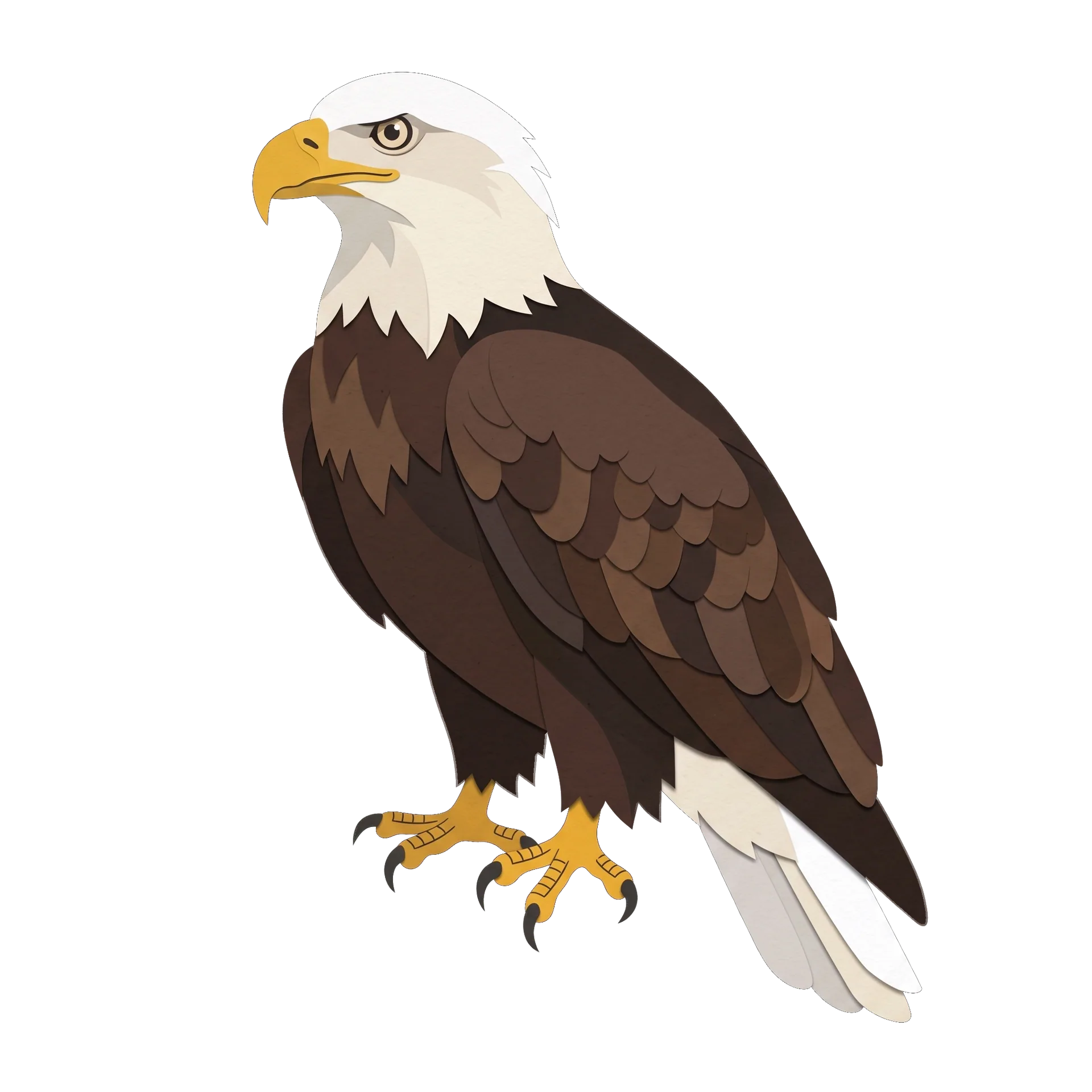
- A huge raptor with a dark brown body and, in adults, a white head and tail that take four to five years to fully develop.
- Immatures are mottled brown all over and are frequently mistaken for Golden Eagles: check the bare lower legs (Golden Eagles are feathered to the toes).
- Massive yellow bill and feet; soars on broad, plank-flat wings rather than the shallow V of a Turkey Vulture.
- Often seen perched near open water, and not above stealing a fish straight out of an Osprey's talons.
Voice
A surprisingly weak, high, chattering whistle: nothing like the piercing scream used in film and TV, which is almost always a dubbed-in Red-tailed Hawk.
Recording: Rachel Thurman, XC1163370, xeno-canto.org (CC-BY 4.0)
Lore
Putting an eagle on the young country's Great Seal took six years and three separate committees. The first, formed the day independence was declared in 1776, included Benjamin Franklin and Thomas Jefferson and proposed no American eagle: Franklin wanted Moses parting the Red Sea, Jefferson favored the Israelites led by a pillar of fire, and the only eagle anywhere in their design was a small German imperial eagle tucked into a shield of European national emblems. A second committee in 1780 added the olive branch and a ring of stars, still with no eagle. It fell to a third committee in 1782 to add one, and Congress's secretary, Charles Thomson, folded their work into the final design adopted that June: an eagle grasping an olive branch in one talon and a bundle of arrows in the other, its head turned toward the olive branch, so the new nation could show it preferred peace but was ready to fight.
Eagle feathers carry a different, older significance across many Indigenous nations, worn in ceremonial regalia and used in ritual long before any of that heraldry existed. Because bald and golden eagles are federally protected today, that use runs through a permit system: the National Eagle Repository outside Denver collects eagles found dead nationwide and distributes feathers and parts, under a lifetime permit, to enrolled members of federally recognized tribes for religious and cultural purposes. Demand outpaces supply badly enough that the wait for an order can run years.
At a glance
- Family
- Accipitridae (hawks, eagles & kites)
- Range
- Throughout North America, generally near large rivers, lakes, or coastline
- Habitat
- Rivers, lakes, and coastlines with tall trees or cliffs for perching and nesting
- Diet
- Mostly fish, caught live or scavenged, plus waterfowl and carrion
Where it lives
How big is it?
How is it doing?
Field notes
- DDT thinned eggshells so badly that Bald Eagles nearly vanished from the lower 48 states by the early 1960s; the 1972 U.S. ban on the pesticide, combined with legal protection, let the population rebound enough for the species to come off the endangered list in 2007.
- Bald Eagles are accomplished kleptoparasites: they routinely harass Ospreys in mid-air until the smaller hawk drops its catch, then swoop down and grab the fish before it hits the water.
- Benjamin Franklin's famous letter grumbling about the eagle's 'bad moral character' and praising the turkey instead was a private aside to his daughter, not a serious proposal; by the time he wrote it, the Bald Eagle had already been the national emblem for years.
Go deeper
The daily email
Get tomorrow's bird in your inbox
One bird at 5:30am ET, every day. Free, no password, one-click unsubscribe — and your life list syncs across devices.
You're in. Your first bird arrives with the next morning email (5:30am ET) — and your life list now syncs.Your account →