The goldfinch runs on a different calendar than every other bird in the yard. While robins are fledging their second brood in June, goldfinches are still loafing in flocks, waiting; their nesting season doesn't begin in earnest until July or even August, timed to the moment thistles, milkweed, and wild lettuce go to seed. The payoff is elegant (thistle down lines the nest, thistle seed feeds the family), and the strategy is so seed-centric that goldfinches feed their chicks regurgitated seed pulp where nearly every other songbird hauls in caterpillars.
That vegetarian commitment has a sharp edge. Brown-headed Cowbirds, which sneak their eggs into other species' nests, get nowhere with goldfinches: a cowbird chick raised on seed mush instead of insects rarely survives a week. Not a defense the goldfinch evolved on purpose, as far as anyone can tell, just a fortunate side effect of an all-grain diet.
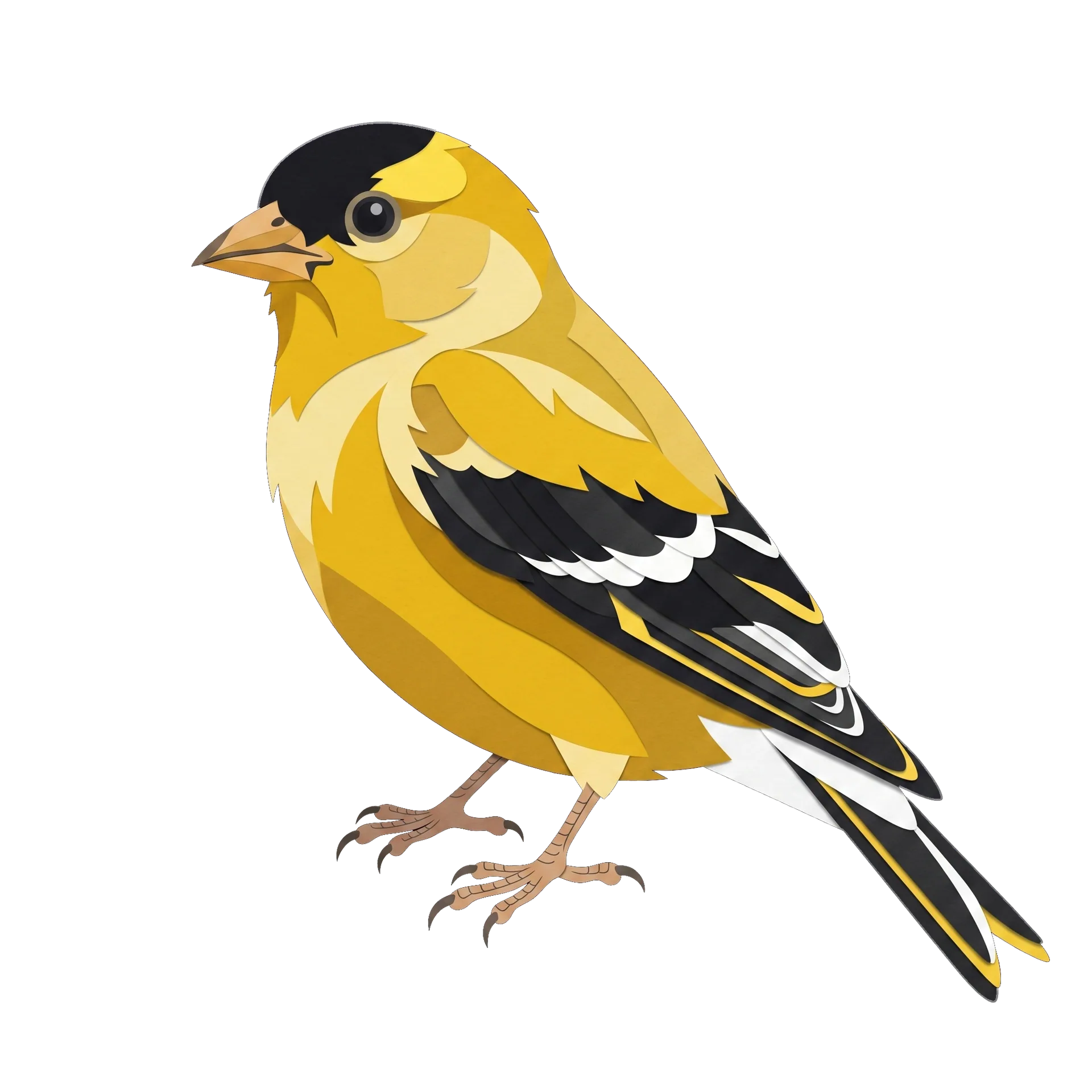
The gold itself comes and goes. Twice a year the entire body plumage is replaced, swinging males between July's blazing yellow-and-black and a winter olive so muted that people regularly ask what happened to 'their' goldfinches. Nothing happened. Watch the feeder in March and you can catch the change mid-stride — patchy, half-gold birds, spring arriving one feather at a time.
Like this? Get one bird every morning, by email.
You're in. Your first bird arrives with the next morning email (5:30am ET) — and your life list now syncs.Your account →
How to identify
- Summer males: lemon-yellow body, black cap pulled low over the forehead, black wings with white bars — nothing else at a feeder matches it.
- Females and winter birds trade the yellow for soft olive-buff, but keep the black wings with bold white wing-bars.
- Flight is deeply bouncy, a roller-coaster of flap-and-fold, each burst of flapping getting its own cheerful po-ta-to-chip.
- Feeds acrobatically on seed heads, often hanging upside down on thistle and sunflower.
- Lookalike caution: escaped canaries lack the black cap and wings; Wilson's Warbler is yellow with a black cap but thin-billed and never at seed feeders.
Voice
A bright per-chick-o-ree (or po-ta-to-chip) tossed off in flight, plus sweet, canary-like twittering song from late spring on.
Recording: Manuel Grosselet, XC1090062, xeno-canto.org (CC-BY-NC-SA 4.0)
Lore
A Seneca story recorded by Mabel Powers in her 1917 collection Stories the Iroquois Tell Their Children explains where the goldfinch's colors came from. A raccoon smears pine gum over a sleeping fox's eyes, blinding him, and a flock of small, plain, dark-feathered birds peck the gum away, bit by bit, until he can see again. Grateful, the fox offers them any reward, and they ask only to look like the sun. He paints them gold with crushed yellow petals, using his tail as a brush, but the birds are too delighted to hold still and flutter off before he reaches their wings and tails, which the story gives as the reason goldfinches wear black wings and a black tail on a sun-yellow body.
Washington's state bird took twenty-three years to settle. Schoolchildren voted first, in 1928, and picked the western meadowlark, already the state bird of seven other states, so lawmakers let the choice lapse. In 1931 the Washington Federation of Women's Clubs ran its own statewide election, and the goldfinch won handily over the tanager, song sparrow, junco, and pileated woodpecker, leaving the state with two unofficial birds and no way to choose between them. The tie-breaker came in 1951, when the legislature sent the question back to schoolchildren one more time; they picked the goldfinch, and it finally became official.
At a glance
- Family
- Fringillidae (finches)
- Range
- Southern Canada and the United States; winters into central Mexico
- Habitat
- Weedy fields, floodplains, roadsides, and feeders
- Diet
- Seeds, seeds, and more seeds: thistle, sunflower, birch, alder
Where it lives
How big is it?
How is it doing?
Field notes
- Goldfinches are among the strictest vegetarians in the songbird world: so committed to seeds that Brown-headed Cowbird chicks, which depend on insect protein, usually starve within days when hatched in a goldfinch nest.
- They're famously late nesters, often waiting until July when thistle and milkweed go to seed, so nest lining and chick food arrive at once.
- The gold comes and goes: goldfinches molt all their body feathers twice a year, and the drab olive winter bird at your feeder is the same animal as July's lemon-bright male.
Go deeper
The daily email
Get tomorrow's bird in your inbox
One bird at 5:30am ET, every day. Free, no password, one-click unsubscribe — and your life list syncs across devices.
You're in. Your first bird arrives with the next morning email (5:30am ET) — and your life list now syncs.Your account →