A Snow Bunting's transformation from winter to spring plumage happens without growing a single new feather. The buffy-brown tips covering a male's feathers all winter simply wear away through months of abrasion against snow and wind, revealing the pure black and white pattern underneath by the time breeding season arrives — a seasonal costume change achieved entirely by wear rather than molt.
Snow Buntings breed farther north than any other songbird on Earth, nesting in the high Arctic of Greenland and on Ellesmere Island, well within the outer edges of habitable land closest to the North Pole, tucking nests into rock crevices that offer a little shelter from Arctic wind.
Winter flocks sort themselves out in a way that hints at competition to come: birds wintering farthest north, closest to the breeding grounds, skew heavily male, while flocks farther south include more females — a pattern that seems to reflect males racing to be first back on territory each spring, willing to endure a harsher winter for the head start.
Like this? Get one bird every morning, by email.
You're in. Your first bird arrives with the next morning email (5:30am ET) — and your life list now syncs.Your account →
How to identify
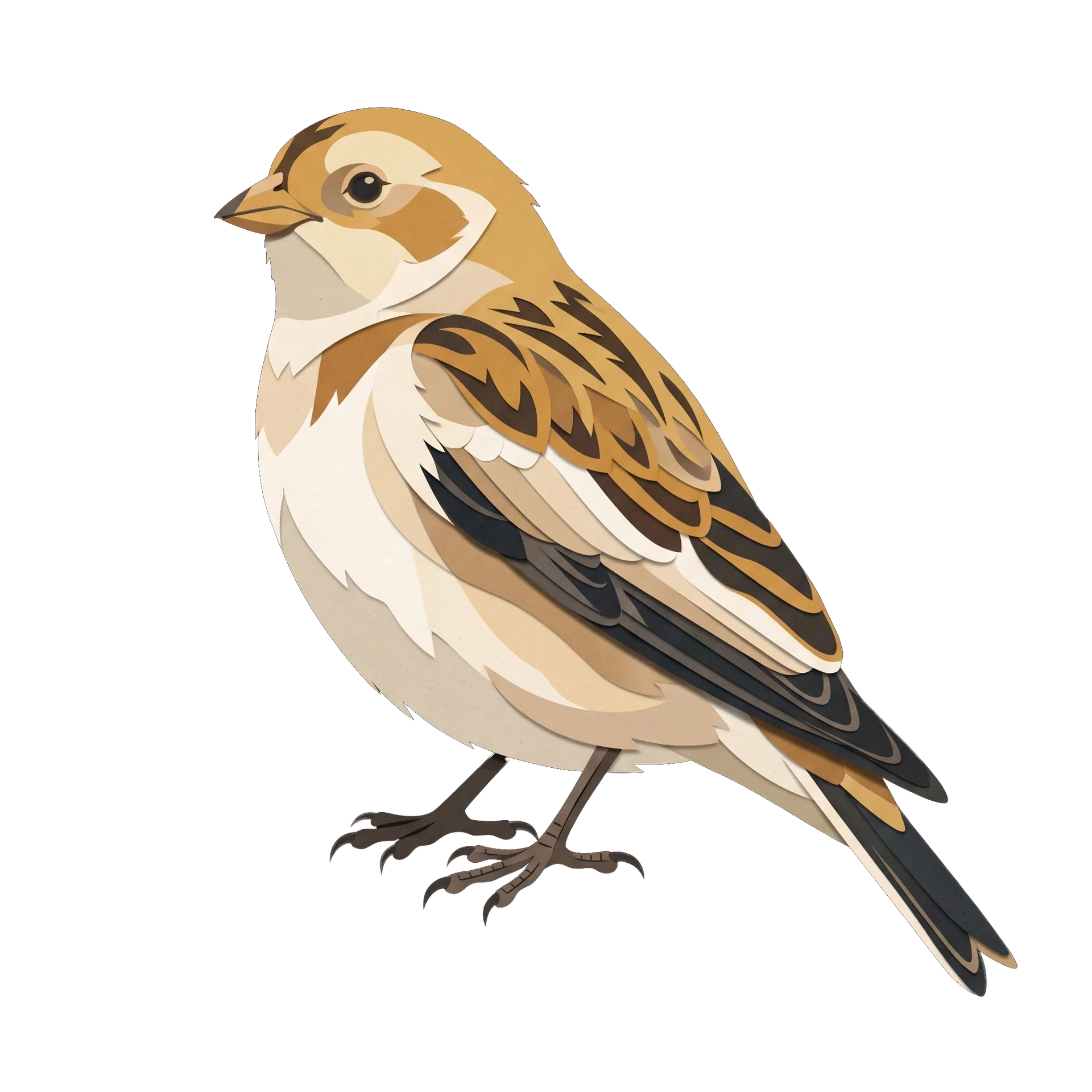
- Winter birds are warm buffy-brown and white, with black in the wings showing as flashes in flight.
- Breeding males turn strikingly pure white and jet black — one of the most dramatic seasonal plumage changes of any songbird.
- Forms loose, swirling flocks over open fields and beaches in winter, flushing and resettling together.
- Nests farther north than almost any other songbird, into the high Arctic of Greenland and Canada's Ellesmere Island.
Voice
A musical, rippling twitter in flight, plus a clear whistled tew given from the ground.
Recording: Sonothèque ADVL, XC950371, xeno-canto.org (CC0 1.0)
Lore
In April 1896 the polar ship Fram was frozen into the drifting ice near 84 degrees north, more than a year after Fridtjof Nansen and Hjalmar Johansen had set off across the ice without her. Captain Otto Sverdrup, in command, recorded in his report that the first sign of spring that year was a snow bunting, which arrived on the evening of April 25. It took up quarters in one of the sealing boats, was fed groats and scraps of food, and got very tame. After several days it flew on; Sverdrup judged that the Fram had been a welcome resting place, where the bird ate its fill and gathered strength for the rest of its journey. On May 3 a snow bunting visited again, and a couple of days later two more came. Sverdrup fancied it was their former guest, who had found a mate in the meantime and returned with her to call and thank the crew for their hospitality. The pair stayed about an hour and did their best to cheer the ship with chirping and twittering, but the dogs chased them everywhere and they finally took flight and did not return.
At a glance
- Family
- Calcariidae (longspurs & snow buntings)
- Range
- Circumpolar Arctic breeder; winters south into the northern U.S. and Eurasia
- Habitat
- Arctic tundra for breeding; open fields, dunes, and shorelines in winter
- Diet
- Seeds in winter; insects during the brief Arctic summer
Where it lives
How big is it?
How is it doing?
Field notes
- Breeding males achieve their striking black-and-white plumage not by growing new feathers but by wearing away the buffy tips of their winter feathers through abrasion over the winter, revealing the pure black and white beneath by spring.
- Snow Buntings nest farther north than any other songbird, breeding in the high Arctic of Greenland and on Ellesmere Island well within a thousand kilometers of the North Pole.
- Wintering flocks in more temperate latitudes are almost entirely male in the far north and increasingly female toward the southern edge of the winter range — a pattern researchers think reflects males wintering closer to the breeding grounds to compete for the best territories first each spring.
Go deeper
The daily email
Get tomorrow's bird in your inbox
One bird at 5:30am ET, every day. Free, no password, one-click unsubscribe — and your life list syncs across devices.
You're in. Your first bird arrives with the next morning email (5:30am ET) — and your life list now syncs.Your account →