A fruiting tree can sit untouched for days and then, without warning, disappear under a wheeling flock of Cedar Waxwings that strips every berry in an afternoon. The flock moves as one unit, dropping in together and lifting off together, trading a thin, buzzy whistle so high-pitched that some people lose the ability to hear it with age.
Fruit dictates almost everything about how this bird lives. Waxwings nest later than most North American songbirds (often not until June), timing their breeding to whenever local berry crops peak rather than to a fixed calendar date. Overripe, fermented berries occasionally cause real trouble: intoxicated waxwings have been documented flying into windows and other obstacles after gorging on fruit well past its prime.
The wing feathers hint at how choosy waxwings are about diet and each other. Red, waxy tips form on some birds' secondary feathers from pigments in specific berries, and the number of these tips increases with age — researchers think older, more experienced birds with more waxy tips are preferred as mates, a rare case of diet directly advertising quality.
Like this? Get one bird every morning, by email.
You're in. Your first bird arrives with the next morning email (5:30am ET) — and your life list now syncs.Your account →
How to identify
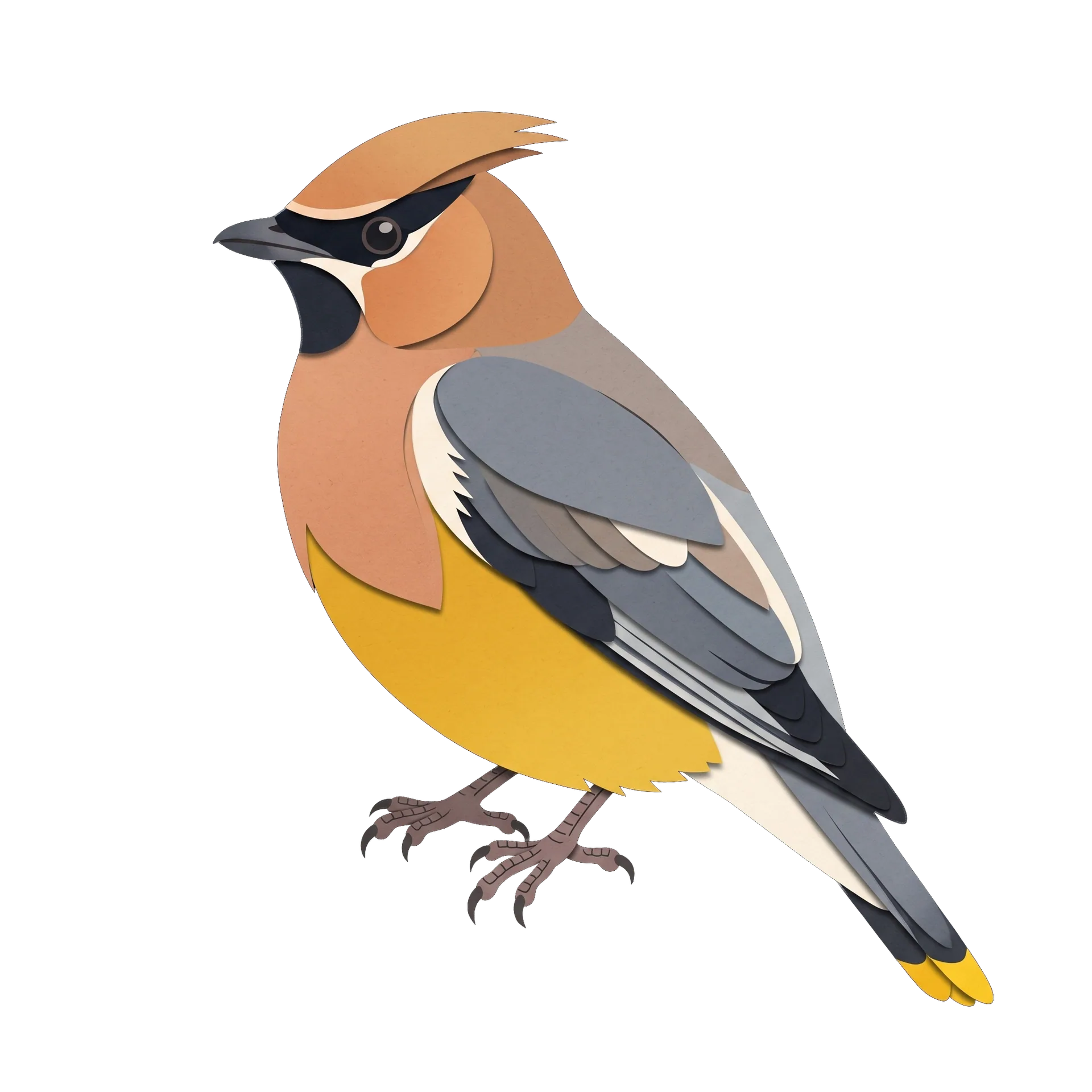
- Sleek, crested songbird in soft fawn-brown, fading to gray on the wings and pale yellow on the belly, with a black mask outlined in white.
- A bright yellow band tips the tail as if dipped in paint; some individuals show waxy red tips on the wing feathers.
- Travels in tight, wheeling flocks that descend on fruiting trees all at once and strip them clean.
- Often heard before seen: a high, thin, trilling whistle overhead.
Voice
A very high, thin, buzzy trill — seeee — easy to miss and easy to mistake for an insect once noticed.
At a glance
- Family
- Bombycillidae (waxwings)
- Range
- Throughout the U.S. and southern Canada; winters into Mexico and Central America
- Habitat
- Open woodland, orchards, and berry-bearing shrubs and trees, including suburban yards
- Diet
- Fruit for most of the year; insects caught in flight during the breeding season
Where it lives
How big is it?
How is it doing?
Field notes
- The waxy red tips on some birds' wing feathers are made of a pigment picked up from certain berries, and their number appears to signal age and quality to potential mates.
- Flocks eating fermented, overripe berries in late fall sometimes become visibly intoxicated, and there are scattered reports of birds dying after colliding with windows or cars while impaired.
- Cedar Waxwings breed unusually late for a North American songbird, often not until June, timing their nesting to whenever local fruit crops peak rather than to a fixed calendar date.
Go deeper
The daily email
Get tomorrow's bird in your inbox
One bird at 5:30am ET, every day. Free, no password, one-click unsubscribe — and your life list syncs across devices.
You're in. Your first bird arrives with the next morning email (5:30am ET) — and your life list now syncs.Your account →